


 Deutsch
Technology Transfer | Biomedicine | Austria | Italy |
Documentation
Insights into cross-border cooperation in the field of biomedicine
The IARA Research Colloquium on 29 April 2026 focused on the Interreg IT-AT PROMOS project, which aims to promote and sustainably anchor biomedical research and networking between the two neighbouring countries through a wide range of activities. We were delighted that 31 people attended and showed interest in this partly ‘highly technical’ topic. The focus was on two major areas of the PROMOS project, the results of which are already largely available and were presented.
Learning from PROMOS Innovation Camps
First, Letícia Cotinguiba Silva informed us about the “Tech Transfer Training & Networking” aspect of the project and presented the findings of the evaluation of the PROMOS Innovation Camps.
During one-week “boot camps”, which took place in person in Klagenfurt and Bolzano, early-stage researchers had the opportunity to receive further training on topics such as entrepreneurship, science communication and intellectual property, to network with experts (who participated on-site or via hybrid formats) and with potential corporate or investment partners, as well as to present and discuss their business ideas for founding start-ups.
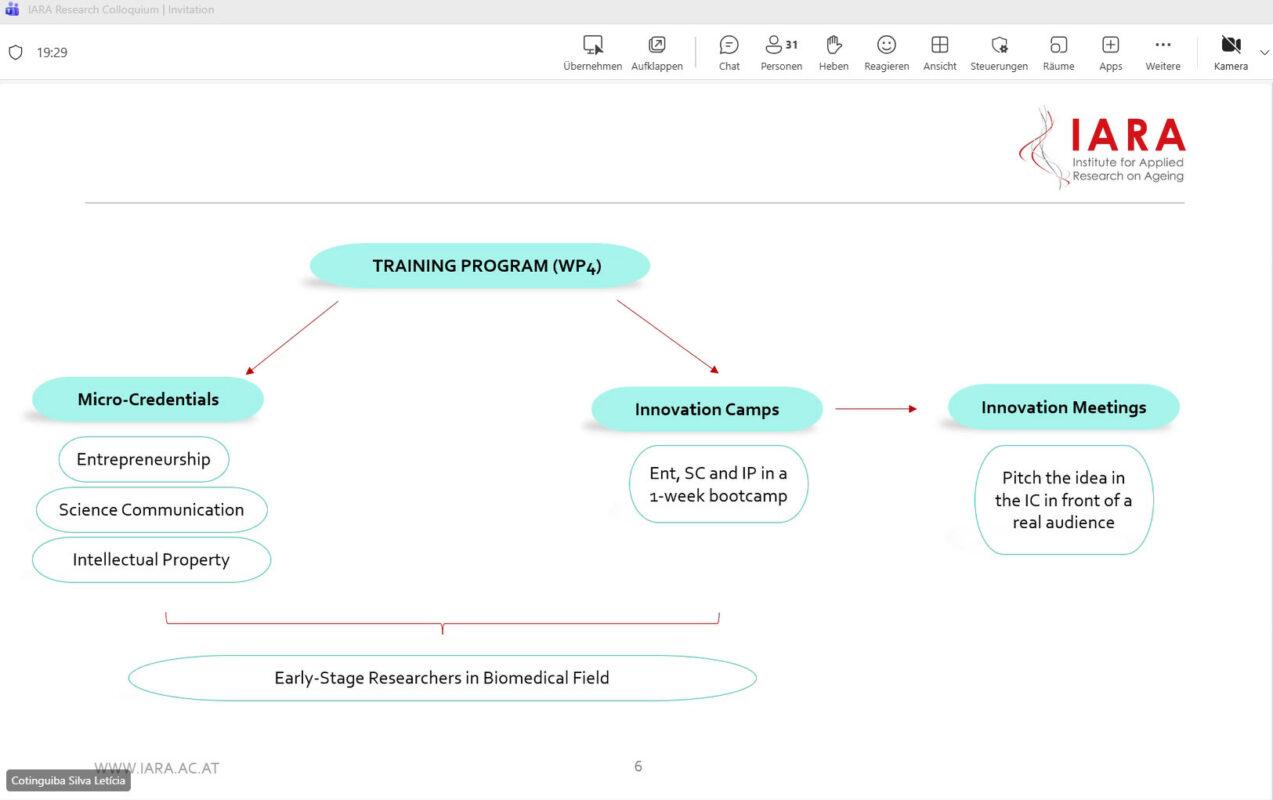
The Innovation Camps thrived on a mix of lectures, independent work on participants’ own biomedical/medical-technology product ideas, company visits, and informal encounters and discussions. The main aim was to ‘translate’ the ideas developed in the ‘academic world’ into concrete solutions for business and society, and to make them appealing to a ‘real audience’ (at the follow-up ‘innovation meetings’).
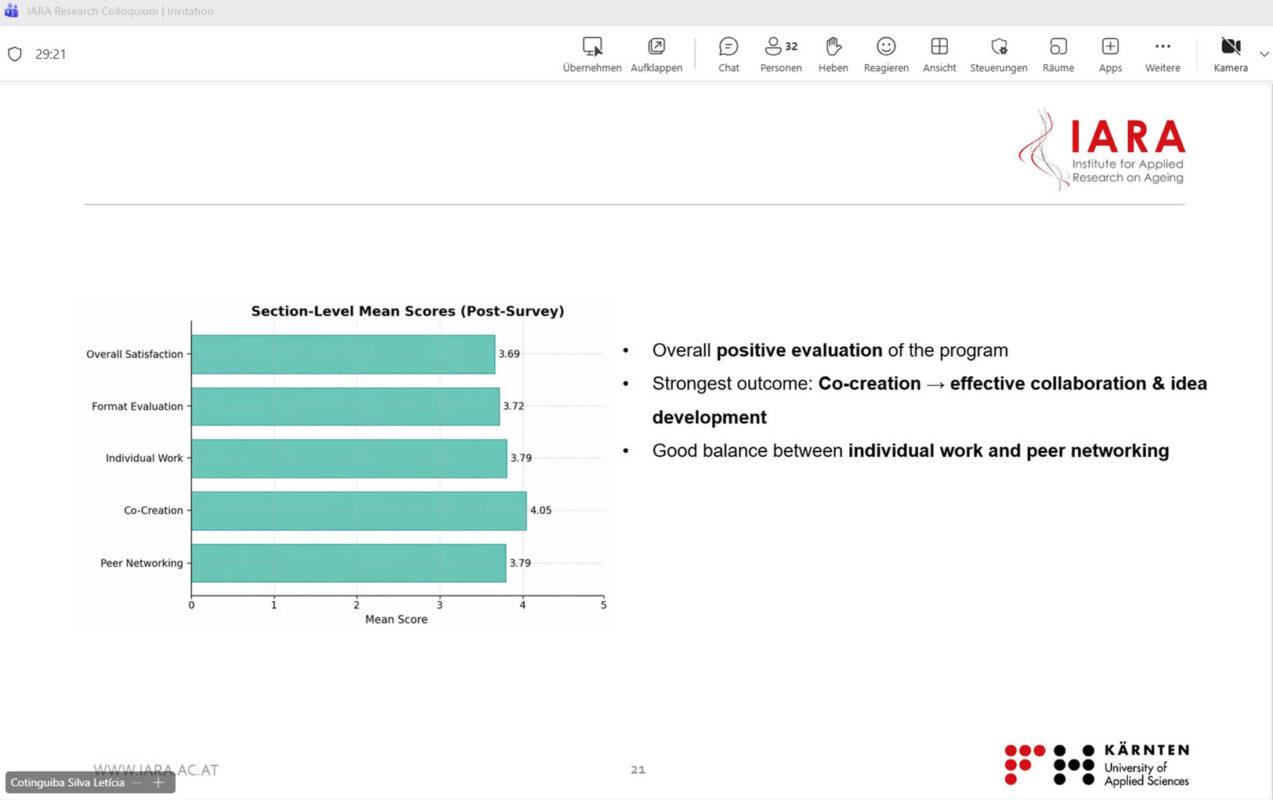
Feedback from participants showed that the programme was very well received, with the effective collaboration (“co-creation”) with experts being most highly valued. The question of whether such a face-to-face training format remains relevant and can hold its own against online formats has not been definitively answered and is the subject of further research.
Building on the Innovation Camps, training modules (Micro-credentials) for Master’s and PhD students were also developed as part of PROMOS, which will remain available beyond the end of the project duration.
Reading the Heartbeat: AI-Powered Analysis of Electrical Signals in Cardiac Cells
In the second part of the research colloquium, Christoph Voutsinas presented work on an AI-powered software solution designed to automatically analyze electrical signals from heart cells.
The broader goal is cardiac safety pharmacology: testing whether pharmaceutical compounds affect the electrical behavior of heart cells in potentially dangerous ways. The cells are derived from human stem cells, and their electrical activity is recorded using a technology called Multi-Electrode Arrays (MEA) — essentially a grid of tiny sensors that pick up the signals the cells produce.
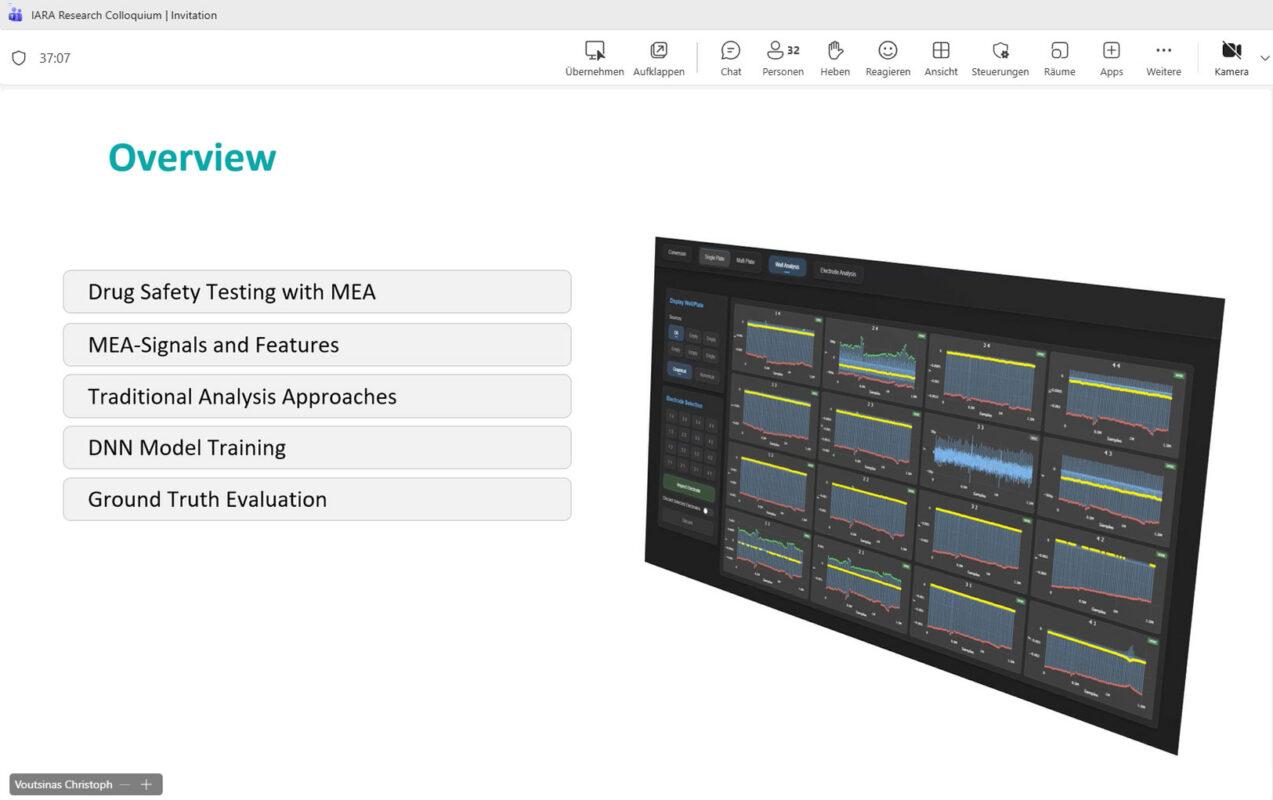
The core idea behind the software is full automation: rather than requiring experts to manually examine and interpret each signal, four specialized AI models work in sequence.
The first two identify the sharp electrical spikes that occur when heart cells fire. The third locates a specific feature called the T-wave, which reflects the electrical recovery of the cell after each beat. The fourth classifies whether the overall signal pattern looks normal or shows signs of irregular, potentially dangerous behavior — so-called arrhythmic events.
From these outputs, the software calculates established parameters used in cardiac safety research, such as the duration of the electrical cycle and beat-to-beat irregularities. A key challenge in building the system was the need for high-quality training data: the AI models had to learn from signals that human experts had previously reviewed and labeled by hand — a process requiring considerable time and effort.
To assess performance, the software’s outputs were compared against manual annotations made independently by three experts.
The results were promising: spike detection was nearly perfect, and timing measurements showed only minimal deviation from the expert reference — well within clinically acceptable limits.
The software is therefore considered suitable for screening the cardiac safety of pharmaceutical compounds. A second validation step, examining responses to specific drugs, is still ongoing.
Further information & contact
For further information on the research colloquium, please contact Christoph Voutsinas at IARA: C.Voutsinas@nullfh-kaernten.at
The PROMOS project is led by ICGEB – International Centre for Genetic Engineering and Biotechnology in Trieste, Italy.
PROMOS websiteWe cordially invite you to the research colloquium of the IARA Institute for Applied Research on Ageing on Wed, April 29, 2026 from 10-11 CEST. The meeting will be held in English, online via Microsoft Teams. The IARA Research Colloquium is a forum for the presentation and discussion of research results and projects as well as for professional exchange.
Cross-border biomedical research, networking and technology transfer
In this edition, we present two outcomes of the PROMOS project, which carries out various activities in the fields of biomedical research and networking, as well as in the development of specialised training programmes. As this Interreg Italy-Austria project is now in its final year, there are a number of updates that we would like to share and discuss with you.
IARA Research Colloquium
|
When | Wednesday, 29 April 2026, 10-11 CEST |
|
Where | online via MS Teams |
|
Registration | until 28 April 2026, 12 noon Registered participants will then receive the access link to the digital meeting room.. |
We look forward to your interest and participation!
| If you would like to receive invitations to IARA events by email, please subscribe to our mailing list. |
In English language!
PROGRAMME
10:00 | Welcome
10:05 | Presentation
Supporting Early-Stage Researchers Through an Interdisciplinary Innovation Camp: Training in Entrepreneurship, Science Communication, and Intellectual Property
Letícia Cotinguiba Silva
10:25 | Presentation
The Utilization of Deep Learning for the Analysis of Electrical Signals from Cardiac Cells: Methodology and Results
Christoph Voutsinas
10:45 | Discussion and exchange
10:55 | Summary and conclusion
Moderation: Johannes Oberzaucher
More about IARA …
IARA was founded in 2016 as the first interdisciplinary competence centre at Carinthia University of Applied Sciences (CUAS) with the aim to support the challenges and potentials of an ageing society through practice-oriented, participative and applied research. Numerous projects in a regional, national and international context have been carried out by our team of engineers, economists and social scientists.